
When Stories Leave the Page: How Libraries and Literary Exhibits Turn Reading Into Visual Experiences
The American Library Association reports that libraries across the world are expanding beyond book lending by introducing interactive exhibits, multimedia displays, and immersive public programming to attract wider audiences and encourage deeper engagement with literature.
That shift has changed how people experience stories. Readers no longer encounter literature only through printed pages. Modern literary festivals, museum exhibits, and public libraries increasingly combine projection art, illuminated panels, soundscapes, and themed installations to transform reading into a physical experience. During planning stages for these exhibits, organizers often research display materials and visual solutions, leading many to discussions about Duratrans printing near me for illuminated storytelling displays and gallery-style installations.
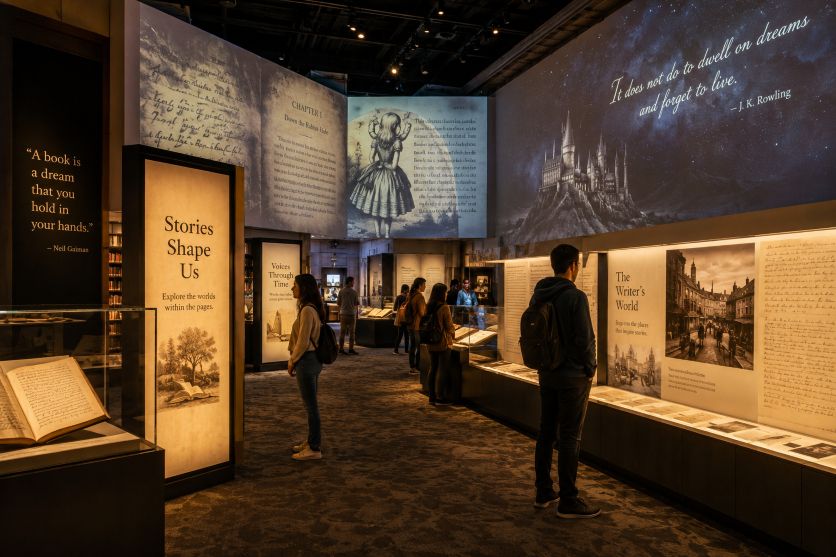
The Call to Transform Reading Spaces
Quiet reading rooms once defined the traditional image of libraries. Shelves stood in straight rows, signs remained simple, and exhibitions usually consisted of framed photographs or handwritten descriptions. That model still exists, but cultural institutions have started adapting to changing visitor expectations.
Research published by Pew Research Center shows that modern library visitors increasingly value experiences, educational events, and collaborative spaces alongside access to books. Museums and literary organizations have responded by treating stories as environments rather than static texts.
A visitor entering a contemporary literary exhibit may now encounter projected poems on walls, recreated settings from famous novels, atmospheric lighting, and audio recordings that guide emotional responses. These spaces encourage audiences to interact with literature in ways that feel personal and memorable.
The transformation often begins with one challenge: how to make reading feel alive for audiences accustomed to digital entertainment and visual media.
The Journey Into Immersive Storytelling
Libraries and museums have gradually borrowed techniques from theater, film, and exhibition design. Curators realized that visual storytelling can help readers connect emotionally with literary themes, especially younger audiences who respond strongly to interactive environments.
The British Library has hosted exhibitions featuring handwritten manuscripts, ambient sound installations, and large-scale visual projections that place historical texts into broader cultural contexts. Meanwhile, institutions such as the Morgan Library & Museum in New York frequently combine rare literary artifacts with carefully designed lighting and exhibit architecture.
These design choices are not purely decorative. Environmental psychology research from the University of Minnesota suggests that lighting and spatial presentation can influence attention span, emotional engagement, and memory retention in educational settings.
That insight has encouraged exhibit planners to think differently about how visitors move through literary spaces. A darkened hallway leading into a brightly illuminated manuscript display creates anticipation. Soft background sound can establish mood before a reader even reaches the featured text.
The result resembles the structure of a hero’s journey itself. Visitors leave familiar environments, enter carefully designed narrative spaces, face emotional or intellectual challenges, and emerge with a stronger connection to the story.
When Literature Becomes a Physical Environment
Some of the most successful literary exhibits recreate scenes from novels or historical periods associated with authors. Visitors might walk through reconstructed Victorian streets inspired by Charles Dickens or explore immersive fantasy-inspired rooms influenced by children’s literature.
The National Endowment for the Humanities has highlighted how experiential exhibits can improve public engagement with literature and history by making abstract narratives feel tangible.
Visual materials play a central role in that process. Large-format graphics, translucent illuminated panels, archival reproductions, and layered photographic displays help transform plain exhibition halls into narrative landscapes.
Modern display technologies allow curators to reproduce fragile manuscripts and artwork without risking damage to original materials. Museums frequently rely on backlit displays to reveal texture and detail while protecting historical artifacts from excessive handling.
For visitors, these choices create emotional immersion. A handwritten letter from an author feels more immediate when paired with atmospheric lighting and carefully designed visual surroundings.
The Challenges Behind the Scenes
Creating immersive literary experiences requires more than creativity. Budget limitations, preservation concerns, and accessibility standards all influence exhibit planning.
The Smithsonian Institution notes that museums must balance visual impact with conservation requirements, especially when displaying rare documents or sensitive archival materials. Excessive light exposure can damage paper, ink, and textiles over time.
Curators therefore search for display methods that maintain readability while protecting historical content. Diffused lighting, illuminated film displays, and high-quality reproductions help reduce strain on original materials.
There is also the challenge of keeping exhibits accessible to diverse audiences. Some visitors prefer traditional reading experiences, while others respond more strongly to multimedia presentations. Successful exhibits often combine both approaches instead of replacing one with the other.
Libraries face similar decisions during renovations and event planning. Public reading programs increasingly include projection walls, interactive timelines, and themed installations to encourage participation among younger visitors and families.
Even temporary literary festivals now resemble immersive cultural environments rather than simple lecture events.
The Return With a New Understanding
The most meaningful literary exhibits do not overwhelm visitors with technology. Instead, they use visual storytelling to deepen emotional understanding of the written word.
That balance matters because literature still depends on imagination. Effective exhibit design supports the reader’s mental experience instead of replacing it.
Harvard Graduate School of Education has published research suggesting that multisensory learning environments can improve comprehension and emotional connection when carefully integrated into educational programming. Libraries and museums appear to be applying those principles in increasingly sophisticated ways.
Visitors often leave immersive literary exhibits with a renewed appreciation for reading itself. Seeing a recreated writing desk, hearing period-inspired soundscapes, or walking through visual interpretations of a novel can create lasting emotional associations. Many institutions are also extending these experiences into digital communities and safe online spaces for modern readers, allowing literary discussions and storytelling engagement to continue beyond the physical exhibit environment.
Children especially benefit from these experiences. Interactive storytelling spaces help young readers associate books with curiosity, exploration, and creativity rather than obligation.
For adults, immersive exhibits often restore a sense of wonder that traditional presentations sometimes struggle to achieve.
Why Visual Storytelling Continues to Grow
Modern audiences consume information through screens, images, and interactive media every day. Libraries and museums understand that adapting to those habits does not mean abandoning literature. Instead, it offers new ways to invite people into stories.
Visual exhibit materials have therefore become increasingly important in literary programming. Backlit archival displays, translucent graphic installations, illuminated panels, and environmental projection systems now appear regularly in museums, public libraries, and cultural festivals.
These elements help bridge the gap between traditional reading culture and modern visual expectations. They also make literary spaces feel more welcoming to visitors who may not normally attend exhibitions or spend time in libraries.
The hero’s journey framework fits this transformation naturally. Cultural institutions themselves have entered unfamiliar territory by experimenting with immersive design. Along the way, they encountered challenges involving technology, preservation, accessibility, and audience expectations.
Yet the outcome reveals something valuable. Stories remain powerful because people still seek emotional connection, meaning, and imagination. Visual environments simply provide another doorway into those experiences.
Conclusion
Libraries and literary exhibits continue evolving from quiet repositories into immersive cultural spaces where stories extend beyond printed pages. Through lighting design, visual installations, multimedia environments, and carefully curated displays, literature becomes something audiences can physically experience rather than simply observe.
Research from respected educational and cultural organizations suggests that these environments improve engagement, strengthen emotional connection, and encourage broader public participation in reading culture. At the same time, curators and organizers remain careful to preserve the integrity of literature itself.
The growing use of illuminated exhibit graphics, translucent display systems, and experiential storytelling techniques reflects a larger shift in how people connect with information and art. Readers still value books, but they increasingly appreciate environments that help stories feel immediate and alive.
When stories leave the page and enter physical spaces, reading becomes a shared journey. Visitors step into narratives, experience atmosphere alongside language, and return with a deeper understanding of why literature continues to matter across generations.